Fain, Stephen M.,, Slater, Judith J.Callejo-Pérez, David M.,eds. Educating For Democracy In A Changing World: Understanding Freedom In Contemporary America. New York : Peter Lang, 2007. Print.
Chapter 11, "Language of the Curriculum: Memes of Practice," Judith J. Slater
Judith J. Slater is a co-author of Higher Education and Human Capital: Re/thinking the Doctorate in America (2011), Collaboration in Education (2010), The War Against the Professions: The Impact of Politics and Economics on the Idea of University (2008), Teen Life in Asia (Teen Life Around the World) 2004), Pedagogy of Place (2003), The Freirian Legacy (2002), Acts of Alignment: Of Women in Math and Science and All of Us Who Search for Balance (2000), and Anatomy of a Collaboration: Study of a College of Education/Public School Partnership (1996).
Educating for Democracy (2007) is a response to the events of 9/11 and argues that while the Bush administration further militarized the United States to protect the country, he carried this movement of regimenting systems to what Cintron calls a "discourse of measurement," a discourse that brought on initiatives such as No Child Left Behind. The ever-increasing threats to our nations security began a self-inflicted threat to freedom in and with Americans. The irony is that freedom, as a requisite condition for democracy, became part of a discourse of measurement that redefined democracy. Democracy in America has become something much more narrow and controlled -- a thin democracy. And this trend has threatened the education in America -- equating learning with test scores and democracy with capitalism. The authors caution Americans and ask that we be more aware of the practices of the state alerting readers to instances of abridgement of our freedoms and pointing to what is influencing such practices. As I am considering critical pedagogy and the practices of teachers in middle and high school, I am looking at how Slater, in particular, considers the rhetoric of curriculum. What is the logic at work here?
Slater begins her chapter talking about the use of language. Of course, in the field of education, mass beliefs and behaviors about education and schooling are communicated through language, and such beliefs are duplicated as that language makes its way through district offices, then faculty meetings, and then the classrooms. We, the education community, make certain assumptions about this language, this semantic environment, and for the most part, the assumptions are that this is what we "should" be doing, especially if it is "research-based." The language, however, is based on an ideology about what education and schooling is supposed to be and do. What is this ideology? "What allows this transformation of idea to language to occur? More importantly, what ideational representations do we place out there in print and between people and institutions that lead to action or inaction, to political, social and economic predispositions that permeate the common agreements that we have about who we understand and misunderstand each other and the institutions that we create to enforce and perpetuate them" (144). Slater considers the mechanism of memetics here.
Citing Richard Dawkins (1989) who coined the term memes to represent those elements of culture that are passed on by imitation, Slater explains that by naming things and ideas, we given them a "boost in their quest for imitation and replication, building more and more memes around theme that are maintained and grow in size and complexity...for example, standardized testing takes on a new meaning within and without the original context that it was designed to represent" (145). Because memes are what Slater calls "second replicators unique to human beings," they vary as they are passed on, never passing exact copies, from person to person. We think, act, and learn through imitation and instruction as we evolve personal ideas that are in the interest of the replicating memes, according to Blakemore (1999). For example, the movement from A Nation at Risk to the legislation of No Child Left Behind demonstrate how ideas were copied from site to site across the country and how classrooms began to look more and more alike as they taught to the test. Teachers stopped talking about what the text is doing and began talking about how to select the best answer because of the spread of memes. But what is it about the language or our minds that explains why some minds imitate and others resist replication? Does the memes need to be more easily imitated in order for it to spread? When I did some research last semester comparing the discourse of two mandates, it was clear that the "standards mandate" was followed and replicated over the "genocide mandate" primarily because the language was more "thin" or easily to replicate.
Slater asks, "How can less spreadable memes be sustained and compete concerning decisions about curriculum and instruction? What conditions would create environments for alternative memes to penetrate the discussion about education?"
If we first think about the functionalist use of language as a form of social control,we can think of language for transmission of information to establish relationship among people. The language itself may not be what controls, however, but rather the interpretation of the language. Slater says that the most powerful meme is democracy, but what meme of democracy is being imitated? Whose version of democracy should be imitated and how is this communicated? Slater writes, "The communicative function uses of mass media, the press, movies, television, and the Internet to help raise aspirations of people as they strive to be like others and this is facilitated by imitating memes. The world keeps going on the collected wisdom, information that helps control the environment from one generation to the next, creating cultural and intellectual cooperation that we take for granted in our meme-driven world" (150). It seems to me that this meme-driven world is, in fact, merely symbolic in nature. It is an imitation and not the real; the rhetoric of democracy, a democracy of competition and measurement, is the verbal world of schools. Slater and Hayakawa call this a false map. The imitator, perhaps a teacher, believes the prejudices of maps that are presented are the actual territory, maps with misinformation and error, rhetorical maps. Because so many teachers believe the map, the meme, is scientifically based and because we believe the source has authority because he or she is in a position of power, then we believe the maps (or language).
Of course, this logic of meme does not put much faith in the minds of teachers to resist meme or to produce new a new meme that might cultivate a profession of critical thinkers. Language is symbolic, and while its interpretation has the power to shape action and inaction,any new meme will not necessarily be any more true than the last. Slater argues against "oververbalizations, smoke screens for action and ideas, guided by words alone rather than facts that should guide us," but the "should guide us" language here assumes the curriculum workers can "create and imitate memes that lead to more appropriate ends" (151). She asks "rather than letting the memes of imitation of programs and ideas control the endless duplication, let those on the front lines, who know the student population best, work toward the goals of equity instead of having the solutions come to them ready made and impenetrable"(152). She is referring to the timelines, penalties, funding and the legislation to measure equity and accountability.
I am not convinced that those on the "front line" can shake the years of mimesis that pervade their pedagogy, but I do think that Slater ends her chapter with an important point about democracy and what a rhetoric of thick democracy can do to counter the logic of meme. Democracy is not about imitation; it is the antithesis. Democracy is complex, messy, and alive. Slater says that an orientation to this type of democracy requires another form of thought and language that is open to debate and dialogue so that they truly reflect the underlying values of a society. "We have to be careful what memes we aid and abet and which ones we as yet have the opportunity to create" (153). Indeed, we do, but the question really needs to be "What is the answer to the logic of meme?"
September 1, 2012

Carr's Educating for Democracy
Carr, P.
(2008). Educating for Democracy: With or without Social Justice. Teacher
Education Quarterly, 35(4), 117-136.
What kind of democracy are we talking about?
When we talk about competition, higher standards, and accountability, we are talking about capitalism and free market. When we talk about be responsive to needs of all students, serving as a force of disrupting status quo (inclusivity), and moving toward a participatory, critically engaged community of learners, we are getting at social democracy. what kind of democracy are we enacting and teaching to our students?
The first section of Carr's article has proven to be the most helpful for my understanding of what happens in the classroom, specifically what knowledges are at the center and the margin of the pedagogy (the vision and materials of the classroom). Epistemologically, what counts as knowledge in that space? Are students learning inclusivity, participation, and critical engagement? Or are they learning obedience and conformity? This either/or is certainly a binary that we can trouble, but I tend to see the overt and hidden messages of schools to be more about obedience and conformity to the idea of America as a free market rather than a social democracy. And for the majority of my students (and their families) who are living in the periphery of the free market, I think enacting a social democracy will help them to construct alternatives or at least begin the delinking that Mignolo talks about. Carr calls this binary thin and thick democracy:
The thick interpretation involves a more holistic, inclusive, participatory, and critical engagement, one that avoids jingoistic patriotism (Westheimer, 2006) and a passive, prescriptive curriculum and learning experience (Apple, 1996). This version of thick democracy reflects a concern for political literacy (Guttman, 1999), emancipatory engagement (Giroux, 1988), and political action (McLaren, 2007) that critics of the traditional or thin conception of democratic education have articulated. The key concern for the thick perspective of democracy resides in power relations, identity and social change, whereas the thin paradigm is primarily concerned with electoral processes, political parties, and structures and processes related to formal democracy. (118)
Another way of looking at this is as I
have stated above which is seeing "thin" democracy as that privatized,
market democracy. If we teach our student to compete by making test
scores the purpose of education, and if we say that our goal is to make
students employable, then we are participating in the neo-liberal
agenda. I think Carr is not actually arguing against agendas, but
arguing for a different agenda -- one of social justice. Social justice
is required because we must actually engage and disrupt the neo-liberal
agenda before and while we are constructing a more "thick" democratic
agenda. We must develop civic literacy if we are to shift schooling.
Carr's paper presents his research in
the College of Education in a university in Ohio where he had students
(129) and faculty (15) complete separate questionnaires in the 2005-6
school year. In these questionnaires, Carr sought to understand how
students and faculty conceptualize democracy and social justice in
education. Students did not tend to see social justice as a fundamental
component of democracy and faculty members noted how the controlling
mechanisms of education/schooling (autocratic in nature) often get in
the way of democratic values. One participant commented on how because
his upbringing was homogenous, it was easy to be a citizen --
citizenship was narrowly defined, which success connecting it with
democracy more explicitly is an important consideration, according to
Carr (124). Another finding with the student population was the the
"impact and role of power in shaping democracy" -- or at least one
particular kind of democracy. Carr quotes Parker(2006) to talk about
preparing teachers and thus students for democratic project:
Difficult though listening is for any of us—especially across social positions—the project is all the more worthy of effort, experimentation, and gumption. In this way, there is some chance that educators might contribute, in a small but significant way, to “re-forming” the democratic public. This public, this heterogeneous group connected by political friendship, fundamentally is one “in which speed takes the place of blood, and acts of decision take the place of acts of vengence” (Pocock, 1998, p. 32). Citizens who possess broad social and disciplinary knowledge plus the disposition to speak and open to one another, whether they like one another or not, are precisely what the democratic project cannot do without. ("Public discourses in schools: Purposes, problems, possibilities." Educational Research, 35 (8), 16.
Carr's research provides several
important considerations for teacher education programs that I see as
equally important for k-12 and college education as well. Teacher
educators and teachers should address the substance and purpose of
classroom practice with emphasis on the quality of what is being taught
and the learning produced (identifying central concepts and in-depth
understanding). Teaching
about democracy and social justice cannot be an "add on" but must be
inherent in practice. He also suggests that we consider the
"starting-point" for students as we develop an conceptual framework for
social justice education so that students can and will engage
critically. He cites Patrick (2003) in Teaching Democracy for an better understanding of this integrated approach:
Effective education for citizenship in a democracy dynamically connects the four components of civic knowledge, cognitive civic skills, participatory civic skills, and civic dispositions. Effective teaching and learning of civic knowledge, for example, require that it be connected to civic skills and dispositions in various kinds of activities. Evaluation of one component over the other—for example, civic knowledge over skills or vice-versa—is a pedagogical flaw that impedes civic learning. This, teaching should combine core content and the processes by which students develop skills and dispositions. (p. 3)
Thus, when we work with new teachers or with K-12 students, we need to think about civic learning as both the how and what of education. There are some systemic obstacles to implementing social justice education -- namely, the capitalist democratic framework of schooling, but that is precisely why the effort must be explicit. As Giroux argues, teachers must be politicized; and as McLaren says: teaching is never neutral.
· Perceptions and experience of the educators in relation to democracy in education and its impact on what students learn about democracy
· Connection between democracy and social justice
· Thin – electoral process, political parties, and structures/processes related to formal democracy
· Thick – holistic, inclusive, participator, and critical engagement avoids jingoistic patriotism and a passive prescriptive curriculum and learning experience – a concern for political literacy, emancipator engagement, political action – the key is in power relations, identity and social change,
· Shifting toward constrained curriculum, supposedly higher standers, greater focus on employability, accountability – decrease in explicitly teaching for and about political literacy
· Desirable traits for people living in a community – recycle, clean up, teat old peoplewith respect – but the are not democratic citizenship
· Galston (2003) and Hess (2004) Teachers must be prepared and willing to address controversial issues in the classroom, and also be able to make direct linkages with civic skills and attidudes in an explicit way
· Most education students have a weak understanding of global issues that directly impact lives of Americans, which necessitates further inquiry into the role of teacher-educators
· Intersection between social justice and democracy
· Marshall and Oliva (2006) – social justice – equity, cultural diversity, the need for tolerance and respect for human rights and identity, the achievement gap, democracy and a sense of community and belongingness, inclusion of groups that do not immediately come to mind – differently abled
· Moral imperative of ethical and responsible leadership
· 3 key components
o Progressive or critical theoretical perspective
o A deconstruction of the practical realities and perpetuation of inequities and the marginalization of members of a learning community who are outside the dominant culture
o View schools as sites that not only engage in academic pursuits but also as locations that help creat actives to bring about the democratic reconstruction of society (Dantly and Tillman, 2006, 18-9)
· Social justice praxis – linking the principles of democracy and equity in provocative ways so that social justice agenda becomes a vibrant part of everyday work of school leaders
· Critical engagement Westheimer and Kahne (2004)
· Education – production and reproduction of particular identities and social positioning
· Bales argues (2006) teacher ed programs need to be vigilant in relation to international trends, research, and developing a relationship between teachers and learners – not discrete and finite set of teacher skills – examine how we might alter the accountability trajectory in the policy spectacle that surrounds us; how far can democratic ed be effectively purused within tightly regimented and highly prescriptive teacher ed programs weary of not meeting standards
· Collaborative inquiry – messy and demanding but aligns with democratic and social justice oriented values
·
Productive
pedagogy – Ladwig (2004)
1. The overemphasis on classroom environments and processes rather than on
substance and purposes.
2. The relationships between foundational studies, curriculum studies and field
experiences which are currently insufficiently connected.
3. The purpose and structure of field experiences which centre too often on practicing
teaching techniques with relatively little concern for what is being taught
and the quality of learning produced.
4. The focus on student management relative to student learning, which mistakenly
assumes that management should be addressed first and separately.
5. The emphasis on syllabus content and constraints of the formal curriculum
relative to identifying central concepts and producing depth of understanding.
· I would argue teaching morally.
· Teaching about controversial issues – democracy and social justice – must take into account the starting-point for students; effective resources that outline the impetus, conceptual framework and application needs to be highlighted
· Refuse to take a neutral position
· Moral imperative of providing ethical and inclusive leadership (Ryan (2006) – curriculum in a socially just way
· Dangers of being too focused on standards Wilson cooper (2006)
1. The overemphasis on classroom environments and processes rather than on
substance and purposes.
2. The relationships between foundational studies, curriculum studies and field
experiences which are currently insufficiently connected.
3. The purpose and structure of field experiences which centre too often on practicing
teaching techniques with relatively little concern for what is being taught
and the quality of learning produced.
4. The focus on student management relative to student learning, which mistakenly
assumes that management should be addressed first and separately.
5. The emphasis on syllabus content and constraints of the formal curriculum
relative to identifying central concepts and producing depth of understanding.
· I would argue teaching morally.
· Teaching about controversial issues – democracy and social justice – must take into account the starting-point for students; effective resources that outline the impetus, conceptual framework and application needs to be highlighted
· Refuse to take a neutral position
· Moral imperative of providing ethical and inclusive leadership (Ryan (2006) – curriculum in a socially just way
· Dangers of being too focused on standards Wilson cooper (2006)
August 26, 2012
Cintron's "Discourse of Measurement"

"As issues of power and social order loom large in Angelstown, Ralph Cintron shows how eruptions on the margins of the community are emblematic of a deeper disorder. In their language and images, the members of a Latino community in a midsized American city create self-respect under conditions of disrepect. Cintron's innovative ethnography offers a beautiful portrait of a struggling Mexican-American community and shows how people (including ethnographers) make sense of their lives through cultural forms."
discourse of measurement -- mapping and texting changed expansive land to something reigned, placed under control -- This reminds me of James Scott's Seeing Like a State with the idea of regimenting or making legible both land and people. But what is lost in this formal, structural, fictitious measuring of this ordering of that which is natural, and by being natural disordered? Prior to formal systems, indigenous people had a a concept of land that was cultural and community-based, not articulated through a discourse of exacting measurement (37). The "texting" that came to expansive nature -- the claim forms, contracts, bills of sale and even street names -- reduced overwhelming space (or perhaps the mystery of space which is not named or measured). Cintron talks about the discourse of measurement here in a way that strikes me similar to James Scott, but as Cintron's book is an ethnography, he also sees telling a story as a discourse of measurement. Such histories reduce time to visible space; the enormity to which the contents of this history point become fenced by the edges of paper. The history is contained in "an illusion of management. Question: how can we read with an eye on this illusion? To not walk away from the text thinking we "know" these people, that their story can be measured by the text, the pages? The author, the enthonographer, is acting upon texts, so the text itself is an example of an ordering of that which is messy or complex. Question: Ethics of authoring?
I am thinking about the movement in Guatemala with Maya revitalization: the Pan-Mayan Movement (http://www.culturalsurvival.org/publications/cultural-survival-quarterly/guatemala/pan-mayan-movement-mayans-doorway-new-millennium). What are the "fences" of this movement? What is the rhetoric? What will be the consequence of Maya lawyers, doctors, and poets in Guatemalan politics? What will happen to the milpas, chicleros, and weaving traditions? It seems that many Mayas in the highlands want subsistence living; they don't want to participate in the free market or politics, and educating their children for careers that place Mayas in the market economy, which is synonymous with government, will put the indigenous way of life in danger. Thus, have not the Maya been resisting the discourse of measurement all along? How has Rigoberta Menchu participating in the discourse of measurement (both the mapping and texting)? Cintron writes that the state cannot exist without a recorded relationship (maps and texts); they cannot manage individuals of the state without evoking the discourse of measurement. Thus, a major function of writing and other recording devices is this management of individuals and nature. However, it is merely a "representation of reality" in documents, documents that distance because of the lack of face-to-face contact (relationships). It is this distance(53) that makes genocidal atrocities possible, and it is this distance that also provides space for resistance and resilience. As Cintron talks to and about Valerio's wall, iconography, and literacy, I was thinking a lot about the indigenous Ka'quikel kids in Chimeltenago, Guatemala. Valerio's teachers wanted him to write "right"-- the structuralist approach that pervades all English classrooms -- they labeled him LD, and it took a lot of time and wounds to get him to believe he was, in fact, smart, and that he could, in fact, write his desires (rather than the formulaic paragraph). I am wondering what will happen when the children from the milpas get a pencil in their hands and begin to write their desires? If a page is blank but we (the measurers of the state) give them the page and the pen, are we writing on them ideas of modern desires? How long will these children stay in school? Perhaps long enough to read a little, write a little, and learn a little math - but perhaps not long enough. They will work with and for their family as soon as they are useful. And then, will they return to the milpa or the loom with ideas of "algo mas" (Fisher) and modernity? Will they turn away from the Maya ways because of school? Do Maya families desire education for their children or is that society's desire? I am now thinking about the poor public school system in Guatemala that provides an 8-12 day of schooling up to 6th grade (18% attend secondary school; 1% attend university). Is this measuring a mechanism for just enough participation in the free market economy but not enough to participate in the structures that control this economy? They are consumers in capitalism not participators in democracy --what Cintron calls a "warped citizenship" (126).
Cintron talks about Beth Roy's idea of "implicit ideology," and I think this is was I am pondering above.Bodies of ideas or ideologies can become so internalized that they disappear as ideas but reappear as emotions and truths -- a common sense understanding of the world so ingrained as to be beyond question and, at the same time, outside consciousness. Let's think about ideas about food and family, for example. The Maya who reside in the Highlands, have a family milpa that may be an hour or two walk from where they live. This milpa provides the corn they need to feed their family for the year and a little more for trading (for other food, medicine, soap). The family clears the milpa, plants the milpa, harvests the milpa. The milpa is an idea that became a truth of the Maya. As measuring changes -- zoning, taxes, sales, transportation -- the implicit ideology shifts. The Maya had to see land as "owned" by the state and were forced to accept the mapping and be marginalized by the "texts" that accompanied such mapping. I could go into this further as one way of thinking about the escalation of mapping and marginalization (and ultimate murder) of the Maya.
Cinton's work ultimately asks how one creates respect under conditions of little or no respect, and while he is exploring how the cheros, Cecilia's continuum of modernity in the neighborhood (222), and how they create respect in the discourse of measurement, I think his study has generalizable features. He writes, "We might imagine a variety of societies, then, urging their citizenry toward the modern in a variety of ways -- and, therefore, simultaneously defining the backward in a variety of ways. Of course, those defined as backward may also, in turn, resist the modern in a variety of ways. And so it goes, the plethora of ways that modernity can take" (227). I saw, for example, widows who are using their traditional dyes and weaving methods as a way of supporting their families: they started a co-operative with other widows to pull together their textiles, rent space in a market, and save money towards the purchase of a building. They have business cards and a website. While most speak the native Quiche, some of the women are bilingual and have enough education to read, write and do the necessary math for their cooperative. They are maintaining their tradition and participating in the market. Chicleros have also reclaimed their craft and have begun a cooperative that no only sells the raw chicle to companies in America (like Glee Gum who advertises this heavily), but one cooperative actually manufacture a fully biodegradable gum marketing it as that which will save towns the clean up costs of the biodegradable, synthetic chewing gums.
Here we see Cintron's second point about the discourse of measurement. He writes, "The discourses of measurement tend to belittle other knowing systems -- implicitly, if not explicitly -- or at least to make a prior discourse of measurement obsolete. ...These displaced ways of knowing and talking represent a precision that may now be taken as one more sign of backwardness when compared to the discourses of modernity" (213). Indeed the discourse of measurement that regimented the expansive Maya land, and the state or plantation land that Maya families cannot afford to buy back (to expand their milpas to provide for their growing families) has pushed Maya ways of knowing to extinction for some families, specifically ones that have to travel to work in factories or move to live in factory towns (abandoning all traditional methods of life and living). This leads into Cintron's third point: "The security that a discourse of measurement offers may increase dependence and a certain anxious expectation concerning the power of its control" (214). Indeed, the government might like for all Mayas to abandon their milpas and come to the cities where they can be made legible (be measured). The land and life they abandon in the highlands will leave a great deal of fertile land for the major corporations,and the people will be thorough absorbed into the economic sphere (Cintron's fourth point about the discourse of measurement) -- the sphere subsistence farmers have avoided for a century.
However, the Maya have worked hard not to make their prior discourse of measurement obsolete. Some Maya (specifically Tecpan) allocate a portion of their milpas for export crops (a risky shift that requires knowledge of cultivating new crops, understanding fertilzation, the distribution business, and new taxes) which allows them a semblance of their traditional subsistance farming; or, as mentioned above, using their skills previously used for subsistence living to participate in niche markets (textiles, gum).
As I am writing here, I an keenly aware of Cintron's argument about ethnography. Writing about a people is one discourse of measurement among many that attempts to shape or made order out of that which is overwhelmingly expansive and complex.
August 16, 2012
Testimonio
Zimmerman, Marc. Literature and Resistance in Guatemala: Textual Modes and Cultural Politics from El Senor Presidente to Rigoberta Menchu. Volume Two. Ohio: Monographs, 1995.
testimonio
testimonio
- reveals the hidden secrets of popular traditions in relation to questions of resistances
- provide access to situations and forms of thought unknown or poorly understood by officially sanctioned culture
- bridges dimensions of the state, social class, and military institutions (sociology) with , popular traditions and every day life (anthropology)
- literary testimonio -- as an aesthetically rich and generally linear first person narration of socially and collectively significant experiences, in which the narrative voice is that of a typical or extraordinary witness or protagonist who metonymically represents other individual or groups that have lived through other, similar situations or the circumstances which induce them
- collective representativeness -- intertextual dialogue of voices, reproducing but also creatively reordering historical events in a way which impresses as representative and true and which projects a vision of life and society in need of transformation (12)
- a genre marked by it status as a subaltern discourse, which came to speak from the perspective of middle or lower sectors frustrated, repressed, marginalized, or exploited under capitalism
- democratic humanism (Duchesne) -- the recuperation of those marginalized by the processes of capitalist modernization throughout the third world; the oppresses, repressed, and humiliated takes a stances against the dominant cultural forms and elaborates its own discursive space; this process takes place with the mediation of an intelligentsia that by definition is lettered (a person who can read and write must mediate the story of the subaltern who is not lettered)
- so...is it mediated or unmediated? Can true testimonio be unmediated? Achugar says that it is inevitably mediated with the intervention of and for the benefit of the lettered; whereas, the left says it is an unmediated voice of a revolutionary-tending social subject constructed as the people.
- Zimmerman and Beverly say that it is a form that takes its place in the struggle for the middle sectors, which are so often crucial in supporting and opposing revolutionary struggles
- Beverly -- a novella-length first person narrative recounted by the protagonist or witness to the events recounted; testifying or bearing witness and the overall narrative unit is a life or a significant life experience; defined by its conflictive relation with established literary-aesthetic norms and with the institution of literature itself
- often at the margins of literature -- representing women, the insane, the criminal, the proletarian -- excluded from authorized representation
- defined as a nonfictional , popular-democratic form of epic narrative, since the narrative "I" has a metonymic function as part of its narrative convention and since the form implies that any life so narratwd can have a kind of representivity
- each given testimony evokes an implicit polyphony of other possible voices, lives, and experiences, and testimonio then involves an erasure of authorial presences and intentionality which makes possible a "comradely complicity between narrator and interlocutor and/or reader" (14)
- interlocutor's function -- what if the narrator requires (which it likely does) an interlocutor with a different ethnic or class background to elicit, edit, publish, and distribute the text? The function can lead to a one-sided questioning or editing that results in a reactionary articulation of the testimonio as a kind of costumbrismo of the subaltern or the smothering of a genuine popular voice by a well-intentioned but repressive notion of correctness;
- the narrator-compiler relationship can stand as a figure for the possible union of a radical intelligentsia and the masses -- a combination which has been decisive in the development of third world movements for social change
- gives voices to the previously voiceless, anonymous, collective pueblo
- suggests not charity but solidarity between the intelligentsia and the masses
- audience -- the readinb public which is still class-limited in advanced capitalist societies; the complicity the form establishes with readers involves their identification with what they may well have seen as an alien or at least distant popular cause; by breaking down distance, testimonio has been important in maintaining and developing the practice of third world solidarity movements (15)
- illusory -- the effect has been produced by a narrator and a compiler; the direct narrator uses oral story-telling tradition and the compiler makes a text out of the material; a metonymic trace of the real
- novel -- private form; both the story and subject end with the end of the text
- testimonio - -the narrator is a real person who continues living and acting in a real social history that also continue; it cannot be analyzed as a text within itselfness
- calls into question the very institution of literature as an ideological apparatus of alienation and domination; "for the form to have become more and more popular in recent years, means that there are experiences in the world today which cannot be adequately expressed in forms like the novel, the short story, the lyric poem, or the autobiography == in other words, which would be betrayed by literature as we know it -- Why
- extraliterary or even antiliterary discourse which is its aesthetic effect
- interlocutor -- interviewer as mediator, interviewer as creative and therefore distorting interlocutor, as censor, editor, conveyor of testimony to those whose literary, ideological, and political norms are shaped by the written word
- Zimmerman argues that given the complex play of international, regional, and national forces, testimonio cannot necessarily signify any decisive or definitive transformation.
August 14, 2012
Farnham: "Ethical Ambiguity" and Teaching about Atrocities
Farnham, J.F. (1983). Ethical
ambiguity and the teaching of the Holocaust. English
Journal,
72(3) , 519-542.
Farnham argues for an educational system that tries to sensitize students to ethical matters and to cultivate both complexity and ambiguity in ethics. His experiences teaching about the Holocaust through literature suggest that the impact of witnessing prisoners and victims abandon their moral codes and follow ethical values geared to survival can rupture a student's binary of good and evil. Our socially constructed notions of what and who is good or evil come with us as we bear witness/listen to stories of atrocity. We expect an S.S. man to be a "moral monster" just as we expect the "victim to be good and innocent," so when students read about what the victim does to survive (see my notes on Never Fall Down), their preconceived notions/stereotypes interrupt "authentic, analytic responses." Farnham writes: "We honor victims more easilyif they are recognizably more innocent like...Martin Luther King, whereas we tend to say that victims whose qualities violate our own sense of morality deserve what they got" (63). If we can select or lead students to inquiry about the "ordinary" victims -- ones who do not fit the hero or martyr stock character -- and if we can create a framework of ideas for students to critically engage -- we can trouble this binary. Farnham asks, "Do victims have to be innocent to make their death significant to us?"
This might be a good place to refer back to Walter Mignolo's work in The Darker Side of Western Modernity (see my notes on that, too). He talks about the rhetoric of Western modernity based on the logic of coloniality. Where this is relevant is that we -- students and teachers linked with Western rhetoric and coloniality -- come to bear witness as readers/listeners with the values of our Western culture. Farnham, however, says that because the Nazi's, when speaking about Holocaust literature, "disavowed the Western tradition of the dignity of the individual person" that what was left was a "moral vacuum, a world without traditional ethical values, and it was within this world that the victims tried to survive, some successfully by abandoning their former ethical values in a world without culture, a world in which traditional ethical values, through no fault of the victims, were absent" (64). While I certainly agree that the camps were a moral vacuum, I am not convinced that Hitler was, in fact, not enacting Western ideology and working within the logic of coloniality. There is little in Western culture that values an individual or sees every human being worthy of dignity. Western ideology values the "1%" or what Mignolo identified as all but the 80% of the population living "without."
The "lamb-like" victims that Farnham argues students want to see when they read about atrocities is evidence of Western rhetoric, which has indoctrinated students with notions of America as good, with victims as innocent, with soldiers and guerrillas as bad; thus, when students encounter a victim surviving at the cost of stealing food from a fellow victim or digging a mass grave for another victim or even invoking a punishment upon fellow man for the sake of survival, students/readers/listeners face a crisis because for this victim to fit into the binary, the student must decide the victim was at fault somehow. And how can we say the victim can be held to the same moral standard when imprisoned in this moral vacuum? So the framework of pedagogy needs to provide support for making sense of why students experience this crisis, why they want to turn way or blame rather than reconstruct notions of good and evil (the Gorgon effect from Clendinen). Farnham writes, " We are in no position to judge the actions of people forced to live without the support of their culture and its values" (64). Here, he is talking about the Judeo-Christian culture whereby to judge a deed morally is to interpret it without context -- and to an extent that is what our students lean toward. How does the logic of death -- certain and irrefutable -- fit with the cultural logic of ethical behavior?
In the "ethical behavior" section, Farnham talks about the importance of education to sensitize its students to ethical matters of our culture. The ethics that I see in the schools are those of capitalism and free market -- those who work hard get ahead; those who prepare for and participate in the market deserve to be successful; those who are not rich are not rich because they didn't work hard; competition breeds greatness not fairness; and equality is based on opportunity not on the conditions of that opportunity. What Farnham argues in this section is that for a deed to be moral, it need not conform to external principles of authority ( I think he means Judeo-Christian) but that because it "contributes to another person's freedom can make that deed moral in itself (but isn't that a principle?_). I guess the idea here is to bring in notions of obedience and conformity as not necessarily being moral but that we are free to choose or to "determine the moral nature of our deeds" (65), which requires a critical consciousness (thinking of Freire here).
Now we can think about how ethics reflect culture. I want to make a comparison here that might not work. In literature of atrocity, we can see the logic of ethics in a moral vacuum -- one of survival that is outside of the culture in which the victim lived or was raised. Behavior may change when people lose the support of their habitual culture. Farnham writes, "...the Holocaust was a rupture in Western culture and thus in Western values." I know what he means here, in the sense that Western culture valued human dignity. However, and here is my comparison, can we begin to think how Western culture and Western values do not value human dignity? Can we talk about how what we see in literature of atrocity and testimony of victims is a consequence of Western rhetoric and the logic of coloniality taken to its logical outcome? The "normal" environment from which the victims are taken might actually be a facade of sorts, that hegemonic forces constructed and allowed until....? So the argument from Farnham that people can still act freely and ethically without the support of authority holds -- yes, we can and should provide this framework for critical engagement. Mignolo would call this delinking, I think. But, I suggest that teaching about atrocities provides a framework for students to see the rhetoric that has constructed their culture. (I am now imagining if readers in third world countries would experience the same crisis reading literature of atrocity as Western readers. Would they be appalled or think the victims are behaving amorally as they struggle to survive? In McCormick's rendering of Arn Chorn-Pond's experience suriving the "killing fields," did she impose her rhetorically shaped Western values in the theme about survival's guilt?)
As Farnham suggests that what is latent in the Western tradition in literature and thus student expectations is "the assumption that heroes in books should be models of good behavior," and what "good behavior" means is also part of that tradition, a tradition that schools cultivate, a tradition that, as I have been arguing, is about conforming to Western rhetoric and the logic of coloniality -- capitalism rather than social democracy.
- · An education system which does not try to sensistize its students to ethical matters fails
- · What materials do you use to sensitize students to ethical matters?
- · Ethical values are one of the voices with which culture speaks to use
- · Examples of individuals and groups whose moral behavior disintegrated when they were deprived of the support of culture
- · What happens when we lose touch with the morals our culture teachers and conditions us to observe
- · Not every deed to be moral must be performed in obedience to some external principle of authority; performing a deed because it contributres to another person’s freedom can make that deed moral in itself
- · Existential approach to ethics – a deed is good because it contributes to another person’s freedom to be, not because it conforms to some external principle of authority, our freedom being that which defines us as human
- · Simone de Beauvoir in the Ethics of Ambiguity – choice and the responsibility which dervies from free choice;
- · Michael Siegel, We want to encourage the growth of citizens who can say no to authority when they judge the response necessary
- · Ethical behavior is not necessarily obedient behavior, not merely conformity to an external set of values – when we practice our freedom, we make ourselves more available to error than if we were to obey a fixed set of values which brook no ambiguity
- · While culture may support us in acting ethically, we are free at all times under all conditions to determine the moral nature of our deeds, as long as we are not deprived of consciousness and self-awareness
- · Surveys the literary texts where ethically ambiguous occurrences reveal ethical choices without cultural support –
July 22, 2012
Menchu, the story of ALL Guatemalans?
I, Rigoberta Menchu, and the Story of All Poor Guatemalans by David Stoll (1992) refutes elements of the taped testimony and autobiography of Rigoberta Menchu (I, Rigoberta Menchu) by Elisabeth Burgos-Debray (1982). Stoll's central argument is that the Burgos account of Menchu's story served to support the guerrillas because she focused all the blame for the violence (genocide) on the government. Furthermore, Menchu put a human face on a clandestine movement (URNG), but as a Maya, she also validated the guerrilla's claim that their revolutionary movement represented the interests of the indigenous peoples who comprised nearly half of Guatemala's ten million people. So while Menchu went on to earn the Nobel Peace prize and brought international attention to the violence and political unrest in Guatemala, Stoll seems to argue that Burgos' book, in fact, misrepresented the guerrilla's actual work and the role of the indigenous peoples in the revolution.
It seems that the first place where Menchu is clearly uniting guerrillas and peasants is when the meaning of companeros shifts from villager to guerrilla in the mountains saying "once the Indian opens his heart to them, all those in the mountains will be his brothers. We didn't feel deceived as we did with the army"(204). However, for an Indian to join the guerrillas he has to perform a death ceremony with his family for the purpose of passing on traditions or 'secrets' of the culture. This clearly aligns some Indians with guerrillas, but the question is whether or not the guerrillas were, in fact,part of the unionizing efforts and land rights organizations. Was this, perhaps, just Menchu's experience of intersecting ideologies or was she exploited by the guerrillas or did she exploit indigenous peoples for the guerrillas anti- government campaign?
When Menchu talks about the development of CUC, she says, "when those student, peasant and worker's leaders died together in the embassy, we knew we had an alliance and we looked at how we would confront the policies of the government together"(231). In 1981, this became the 31st January Popular Front to honor those killed in the Spanish embassy on that day; so while she says the CUC incorporates all peasants, she goes on to say "we" used real bombs but also propaganda bombs (233). However, later she decides her role is not with the CUC but another faction of the popular front, one with a Christian foundation saying she would not take up arms: "the people, the masses, are the only ones capable of transforming society"(246). She says she will teach her people to build a people's church not the Catholic church.
Misrepresentation might be the problem of "non-fiction" and testimony -- if only one testimony is given voice, then such an experience is in danger of essentializing a people. Thus, Stoll's efforts in his book to take multiple testimonies and to refute aspects of Burgos' rendering of Menchu's testimony, THE testimony of Indios, seem to be a worthy historical project: the doing of history. In showing the rhetorical function of Menchu's story, Stoll makes visible the rhetoric of modernity. I argue, and Stoll may argue this too as I am not finished with his book, civilians had to be rhetorically aligned with the guerrillas and Rigoberta had to be the face of the revolution (not an armed, male, dressed in fatigues -- a symbol of communism/socialism that prompted the US military support in the 60s/70s) for the Western/colonial forces to take notice and to facilitate peace talks. As it was, the West was not interested in peasant land rights because the allocation of land suited the free market well (e.g., the United Fruit Company).
It seems that the first place where Menchu is clearly uniting guerrillas and peasants is when the meaning of companeros shifts from villager to guerrilla in the mountains saying "once the Indian opens his heart to them, all those in the mountains will be his brothers. We didn't feel deceived as we did with the army"(204). However, for an Indian to join the guerrillas he has to perform a death ceremony with his family for the purpose of passing on traditions or 'secrets' of the culture. This clearly aligns some Indians with guerrillas, but the question is whether or not the guerrillas were, in fact,part of the unionizing efforts and land rights organizations. Was this, perhaps, just Menchu's experience of intersecting ideologies or was she exploited by the guerrillas or did she exploit indigenous peoples for the guerrillas anti- government campaign?
When Menchu talks about the development of CUC, she says, "when those student, peasant and worker's leaders died together in the embassy, we knew we had an alliance and we looked at how we would confront the policies of the government together"(231). In 1981, this became the 31st January Popular Front to honor those killed in the Spanish embassy on that day; so while she says the CUC incorporates all peasants, she goes on to say "we" used real bombs but also propaganda bombs (233). However, later she decides her role is not with the CUC but another faction of the popular front, one with a Christian foundation saying she would not take up arms: "the people, the masses, are the only ones capable of transforming society"(246). She says she will teach her people to build a people's church not the Catholic church.
Misrepresentation might be the problem of "non-fiction" and testimony -- if only one testimony is given voice, then such an experience is in danger of essentializing a people. Thus, Stoll's efforts in his book to take multiple testimonies and to refute aspects of Burgos' rendering of Menchu's testimony, THE testimony of Indios, seem to be a worthy historical project: the doing of history. In showing the rhetorical function of Menchu's story, Stoll makes visible the rhetoric of modernity. I argue, and Stoll may argue this too as I am not finished with his book, civilians had to be rhetorically aligned with the guerrillas and Rigoberta had to be the face of the revolution (not an armed, male, dressed in fatigues -- a symbol of communism/socialism that prompted the US military support in the 60s/70s) for the Western/colonial forces to take notice and to facilitate peace talks. As it was, the West was not interested in peasant land rights because the allocation of land suited the free market well (e.g., the United Fruit Company).
Tree Girl a young adult novel written by Ben Mikaelsen (2004) complicates Menchu's account as well and seems to support Stoll's argument in that the protagonist, Gabriela Flores, and her Quiche canton do not have any affiliation with the guerrillas or the government. The plot shows how the villagers are careful not to take sides in the conflict despite the guerrillas efforts to say they were helping the canto get land rights and the government checking to see if the Quiche learned Spanish (a sign that the different ethnic Indios were now collaborating) and later outlawing machetes. The protagonist notes how she can tell the difference between the guerrillas and the soldiers (sometimes pretending to be guerrillas to get information) because of the modern weapons (American) they carried. So this story, like Stoll, want to complicate the context of the political unrest and show that the Indios were not necessarily aligned with the guerrilla movement anymore than they were content with the government land policies.I think Grandin's book, The Last Colonial Massacre, does a nice job of presenting the complexity of the Guatemala's political history including all the different revolutionary groups, their leaders, their objectives, and successes with failures -- using several testimonies but a great deal of primary sources.
Stoll clearly indicates that Menchu and Burgos' work brought international pressure for Guatemala to participation in UN sponsored peace talks. Guatemala's civilian government, army, and guerrilla movement signed a peace agreement in 1996. The international community negotiated with human rights certification and trade packages, but it was Menchu who turned a local situation into a dramatic international symbol (would Mignolo call this rhetoric of modernity, the logic of coloniality?).
Oral testimonies like I, Rigoberta Menchu have become controversial (see my post about Zimmerman's description of testimonio). Indigenous and other marginalized groups are insisting on equality so they are less willing to have their words mediated by outsiders including anthropologists accustomed to speaking and writing on behalf their behalf. (thinking of Linda Tuhiwai Smith who advocates for Maori to write about Maori). Stoll shares his experience coming face to face with Menchu at a conference where he presented Menchu with the "real" account of the death of her brother: "Whites have been writing our history for five hundred years, and no white anthropologist is going to tell me what I experienced in my own flesh" (227). One of facts that Stoll refutes is that Menchu was, in fact, educated and did, in fact, speak Spanish. If this is the case, why, then did Menchu need Elisabeth Burgos as "the intermediary" who shaped Menchu's story for publication. Stoll argues that Menchu was sufficiently literate throughout the book and questions why Menchu neglected to tell this part of her story. The question remains of this testimonio (and for the genre more generally) as to who authored the book. If Stoll is arguing that it was Menchu, and that Menchu was indeed literature, then the question he needs to be asking why Menchu used Burgos as an intermediary -- especially if the taped testimony was not intended to become a book? And if there is a question as to Burgos' faithful rendering of the taped tesimony, that answer can be easily determined by listening to the tapes. Stoll says he listed to 2 hours of it. It seems to me that such an investigation should have been Stoll's first step. Ultimately, Stoll concludes that "contrary to the laureate's occasional statements to the contrary, there is every reason to believe that I, Rigoberta Menchu is her own account of her life" (183). Burgos who has edited more than one oral testimony says,
What Stoll could have done with this book was to take more thorough testimonies to examine the narrative process along with exploring the experience being the intermediary. Would he see the imagining that Burgos notices in her storytellers? Stoll admits that this would have been one way to do it-- the comparison of narrative (but I guess that is left for the reader). He wanted to evaluate oral testimony using documents that could set parameters (e.g., land contracts and human rights reports). But such documents are also partial narratives and such documents are not the work of testimonio nor does testimonio claim to be.Stoll talked to Beverley and George Yudice, literary scholars. Beverley defined testimonio as a story "by a narrator who is also a real protagonist or witness of the event he or she recounts" while Yudice feints it as "an authentic narrative, told by a witness who...portrays his or her own experience as an agent (rather than a representative) of a collective memory and identity" (242). Stoll argues that Menchu's book was not testimonio because it fails the eye witness test, but he seems most upset by our "unfortunate tendency to idolize native voices that serve our own political and moral needs, as opposed to others that do not" (242). I think he is really referring to his refutation as something that does not serve our needs.
Indeed, readers should step back from any text and weigh reliability, but what is Stoll exactly trying to prove? I think he is trying to expose how I, Rigoberta Menchu was a work of Western rhetoric. Menchu appealed to the Western expectation of native peoples; he argues that Menchu was charming her audience to get a hearing with mythic inflation (232) -- monolingualism, illiteracy, rejection of Western technology. There is a danger of essentializing a people and distorting debates about indigenous issues. I think, based on what I have read and my own conversations with the Maya, that Stoll's secondary argument that Menchu is not necessarily speaking for ALL Guatemalans is more convincing and can at least be argued with claims and evidence. Is it fair to say that all peasants were ideologically committed to revolution? He writes, "Although some peasants acknowledge being attracted to the revolutionary vision, their moment of decision usually follows the onset of army retaliation. They face a grim choice between surrendering to army killers, escaping to coastal plantations, or casting their lot with the insurgency, if only by staying in a village over which the guerrillas are asserting control" (191-2).
What I, Rigoberta Menchu does -- and I think this is Stoll's contribution -- is that it is functions as a "symbol that resolves painful contradictions by transcending them with a healing image," and what that painful contradiction is depends on the beholder. The beholder is the white middle class and the symbol functions to bring the gap between privilege or Western values and its opposite. The symbol identifies a common enemy -- here the Guatemalan army. The privileged and the unprivileged, according to Stoll, can stand on the same side. The symbol is a unifying image. Imagine, however, if Menchu would have identified the US government who trained the Guatemalan army in her testimony. (Menchu narrated When Mountains Tremble, when this information was clearly presented; she seemed to know the US role in the genocide, yet she did not talk about the US or use the word genocide in her testimony.) Menchu was making an argument for peace in her country; she needed to get her story out there, and she seemed to know what story was going to achieve that goal. Her story is both a narrative and an argument, but Stoll wants to say that we are caught up in that argument , privileging a story, and essentializing a people which takes us further from understanding life of Guatemalans.
"Only by establishing chronologies, vantage points, and probabilities can we have any hope of evaluating the reciprocal stories of victimization that are used to justify violence, or how these claims become rationales for larger political interests, or how human beings can be induced into committing mayhem" (274).The concern I hear is how cultural studies and postmodernism can be and have been used to silence inquiry by doing what Stoll says is " reducing intellectual discourse to relations of power and dismissing opposed points of view as reactionary. Scholars have to be able to critique a text to consider the different imaginings of the "other" and to consider what's behind privileging one version of a history over another. Stoll argues that the consequence of publishing this rendering of Menchu's story with the guerrilla movement depicted as a movement for and with the peasants was a Novel peace prize that prolonged a war because it was tailored to the propaganda needs of a guerrilla movement that had lost hope and leverage; the war continued for another fourteen years even thought it did use the international human rights movement to keep pressure on the Guatemalan army and finally obtain the December 1996 peace agreement (which may have been resolved earlier had the book told a different story).
While I, Rigoberta Menchu presents a tale of the necessary guerrilla movement to resist government oppression, Stoll concludes his book by asking What gave rise to such ferocious regimes in the first place? And Greg Grandin offers an answer to this in his book The Last Colonial Massacre. Similar to Grandin's argument, Stoll explains that the US bears much of the responsibility for this progressively violent militarization of the Guatemalan government. And the guerrilla movement has to accept responsibility for positioning the peasants as military targets, specifically indigenous groups who do not share the revolutionary vision. The imagery of native insurrection spread through the rhetoric of I, Rigoberta Menchu (notice that I am careful not to say that it was Menchu, specifically) was critical to romanticizing the guerrilla movement and its legitmacy. Stoll has argued that the Menchu family was not representative of the poorest peasants and that the idea of a guerrilla insurgency actually originated in the plans of nonindigenous revolutionaries (Ladinos and ex-government agents as depicted in Tree Girl, When Mountains Tremble, and Granito). The middle class radicals seeking solidarity with the countryside is an "urban romance" that is "more likely to kill off the left than build it" (282).
Oral testimonies like I, Rigoberta Menchu have become controversial (see my post about Zimmerman's description of testimonio). Indigenous and other marginalized groups are insisting on equality so they are less willing to have their words mediated by outsiders including anthropologists accustomed to speaking and writing on behalf their behalf. (thinking of Linda Tuhiwai Smith who advocates for Maori to write about Maori). Stoll shares his experience coming face to face with Menchu at a conference where he presented Menchu with the "real" account of the death of her brother: "Whites have been writing our history for five hundred years, and no white anthropologist is going to tell me what I experienced in my own flesh" (227). One of facts that Stoll refutes is that Menchu was, in fact, educated and did, in fact, speak Spanish. If this is the case, why, then did Menchu need Elisabeth Burgos as "the intermediary" who shaped Menchu's story for publication. Stoll argues that Menchu was sufficiently literate throughout the book and questions why Menchu neglected to tell this part of her story. The question remains of this testimonio (and for the genre more generally) as to who authored the book. If Stoll is arguing that it was Menchu, and that Menchu was indeed literature, then the question he needs to be asking why Menchu used Burgos as an intermediary -- especially if the taped testimony was not intended to become a book? And if there is a question as to Burgos' faithful rendering of the taped tesimony, that answer can be easily determined by listening to the tapes. Stoll says he listed to 2 hours of it. It seems to me that such an investigation should have been Stoll's first step. Ultimately, Stoll concludes that "contrary to the laureate's occasional statements to the contrary, there is every reason to believe that I, Rigoberta Menchu is her own account of her life" (183). Burgos who has edited more than one oral testimony says,
The person feels carried away by her voice, her memory, and above all her capacity to improvise. She imagines, but in a true manner, on the basis of events that have happened, such that what is imagined has a real dimension...I have become aware that they relate, as their own experiences, what they could not have witnessed directly, what instead happened in proximity to their own histories. It is not that they act in bad faith, nor that they lie. Instead, they are moved by a feeling of belonging. This feeling of belonging, of identifying with peoples, occurs when they feel empowered to elaborate their own version of history...It is not the same as reflecting on the basis of writing. The act of telling a story orally requires recreating what happened through images , it requires setting a stage, like a theater director would, and requires what theater does -- to demonstrate. (199)
Therefore, I think that Stoll's anthropological approach to refuting Menchu's "own story" is ultimately insufficient if we are to understand history. Narratives are already incomplete with gaps and fissures -- whether it is testimonio, autobiography or even an anthropological text. A critical reader knows this and accepts this.
What Stoll could have done with this book was to take more thorough testimonies to examine the narrative process along with exploring the experience being the intermediary. Would he see the imagining that Burgos notices in her storytellers? Stoll admits that this would have been one way to do it-- the comparison of narrative (but I guess that is left for the reader). He wanted to evaluate oral testimony using documents that could set parameters (e.g., land contracts and human rights reports). But such documents are also partial narratives and such documents are not the work of testimonio nor does testimonio claim to be.Stoll talked to Beverley and George Yudice, literary scholars. Beverley defined testimonio as a story "by a narrator who is also a real protagonist or witness of the event he or she recounts" while Yudice feints it as "an authentic narrative, told by a witness who...portrays his or her own experience as an agent (rather than a representative) of a collective memory and identity" (242). Stoll argues that Menchu's book was not testimonio because it fails the eye witness test, but he seems most upset by our "unfortunate tendency to idolize native voices that serve our own political and moral needs, as opposed to others that do not" (242). I think he is really referring to his refutation as something that does not serve our needs.
Indeed, readers should step back from any text and weigh reliability, but what is Stoll exactly trying to prove? I think he is trying to expose how I, Rigoberta Menchu was a work of Western rhetoric. Menchu appealed to the Western expectation of native peoples; he argues that Menchu was charming her audience to get a hearing with mythic inflation (232) -- monolingualism, illiteracy, rejection of Western technology. There is a danger of essentializing a people and distorting debates about indigenous issues. I think, based on what I have read and my own conversations with the Maya, that Stoll's secondary argument that Menchu is not necessarily speaking for ALL Guatemalans is more convincing and can at least be argued with claims and evidence. Is it fair to say that all peasants were ideologically committed to revolution? He writes, "Although some peasants acknowledge being attracted to the revolutionary vision, their moment of decision usually follows the onset of army retaliation. They face a grim choice between surrendering to army killers, escaping to coastal plantations, or casting their lot with the insurgency, if only by staying in a village over which the guerrillas are asserting control" (191-2).
What I, Rigoberta Menchu does -- and I think this is Stoll's contribution -- is that it is functions as a "symbol that resolves painful contradictions by transcending them with a healing image," and what that painful contradiction is depends on the beholder. The beholder is the white middle class and the symbol functions to bring the gap between privilege or Western values and its opposite. The symbol identifies a common enemy -- here the Guatemalan army. The privileged and the unprivileged, according to Stoll, can stand on the same side. The symbol is a unifying image. Imagine, however, if Menchu would have identified the US government who trained the Guatemalan army in her testimony. (Menchu narrated When Mountains Tremble, when this information was clearly presented; she seemed to know the US role in the genocide, yet she did not talk about the US or use the word genocide in her testimony.) Menchu was making an argument for peace in her country; she needed to get her story out there, and she seemed to know what story was going to achieve that goal. Her story is both a narrative and an argument, but Stoll wants to say that we are caught up in that argument , privileging a story, and essentializing a people which takes us further from understanding life of Guatemalans.
"Only by establishing chronologies, vantage points, and probabilities can we have any hope of evaluating the reciprocal stories of victimization that are used to justify violence, or how these claims become rationales for larger political interests, or how human beings can be induced into committing mayhem" (274).The concern I hear is how cultural studies and postmodernism can be and have been used to silence inquiry by doing what Stoll says is " reducing intellectual discourse to relations of power and dismissing opposed points of view as reactionary. Scholars have to be able to critique a text to consider the different imaginings of the "other" and to consider what's behind privileging one version of a history over another. Stoll argues that the consequence of publishing this rendering of Menchu's story with the guerrilla movement depicted as a movement for and with the peasants was a Novel peace prize that prolonged a war because it was tailored to the propaganda needs of a guerrilla movement that had lost hope and leverage; the war continued for another fourteen years even thought it did use the international human rights movement to keep pressure on the Guatemalan army and finally obtain the December 1996 peace agreement (which may have been resolved earlier had the book told a different story).
While I, Rigoberta Menchu presents a tale of the necessary guerrilla movement to resist government oppression, Stoll concludes his book by asking What gave rise to such ferocious regimes in the first place? And Greg Grandin offers an answer to this in his book The Last Colonial Massacre. Similar to Grandin's argument, Stoll explains that the US bears much of the responsibility for this progressively violent militarization of the Guatemalan government. And the guerrilla movement has to accept responsibility for positioning the peasants as military targets, specifically indigenous groups who do not share the revolutionary vision. The imagery of native insurrection spread through the rhetoric of I, Rigoberta Menchu (notice that I am careful not to say that it was Menchu, specifically) was critical to romanticizing the guerrilla movement and its legitmacy. Stoll has argued that the Menchu family was not representative of the poorest peasants and that the idea of a guerrilla insurgency actually originated in the plans of nonindigenous revolutionaries (Ladinos and ex-government agents as depicted in Tree Girl, When Mountains Tremble, and Granito). The middle class radicals seeking solidarity with the countryside is an "urban romance" that is "more likely to kill off the left than build it" (282).
- Grandin, Greg. The Last Colonial Massacre: Latin America in the Cold War. Chicago: University of Chicago, 2004. Print.
- Menchú, Rigoberta, and Elisabeth Burgos-Debray. I, Rigoberta Menchú: An Indian Woman in Guatemala. London: Verso, 1984. Print.
- Menchú, Rigoberta, and Ann Wright. Crossing Borders. London: Verso, 1998. Print.
- Mikaelsen, Ben. Tree Girl: A Novel. New York: HarperTempest, 2004. Print.
- Stoll, David. Rigoberta Menchú and the Story of All Poor Guatemalans. Boulder, CO: Westview, 1999. Print.
July 20, 2012
Signs of Change: Past and Present Cultural Landscapes of Guatemala, 2012
Signs of Change: Past and Present Cultural Landscapes of Guatemala, 2012
Posada de Don Rodrigo, Antigua
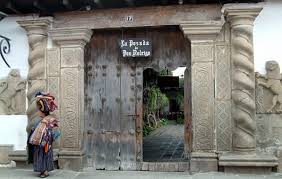
Casa Herrera, owned and operated by the University of Texas at Austin and Fundacion Pantaleon: curriculum development

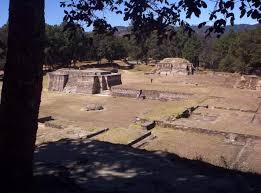
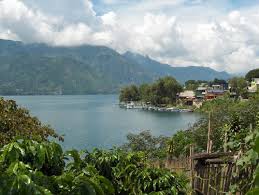
Iximche --Lake Atitlan: pre-colonial archaeological site
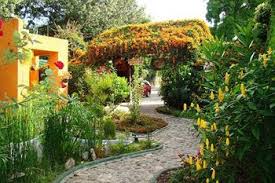
Posada de Don Rodrigo, Panajachel
San Pedro, women's weaving collectives
Chichicastenango: market, center of K'iche Maya culture

Santo Tomas Church: Maya and Catholic rituals blended
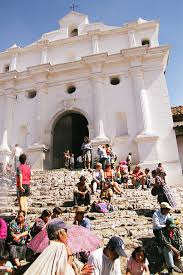
Proyecto Linguistico Francisco Marroquin: Kachiquel language presentation
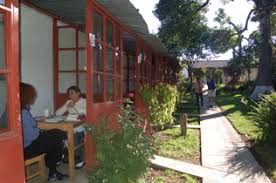
Patchali School: primary school
Tikal National Park
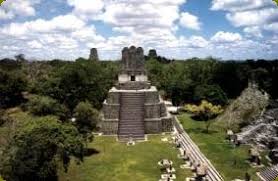
Jaguar Inn


Posada de Don Rodrigo, Antigua
Casa Herrera, owned and operated by the University of Texas at Austin and Fundacion Pantaleon: curriculum development
Iximche --Lake Atitlan: pre-colonial archaeological site
Posada de Don Rodrigo, Panajachel
San Pedro, women's weaving collectives
Chichicastenango: market, center of K'iche Maya culture
Santo Tomas Church: Maya and Catholic rituals blended
Proyecto Linguistico Francisco Marroquin: Kachiquel language presentation
Patchali School: primary school
Tikal National Park
Jaguar Inn
July 19, 2012
"Radical [or Thick] Democracy" (Lensmire)
When I titled this blog "Thick Democracy," I had in mind a kind of democracy beyond the form of capitalism the United States is offering the world in then name of "progress" and "development" (that from which Mignolo argues a delinking). I am not interested in markets or globalization or domination or producing workers for the "free market" who live to work rather than work to live. I certainly do not mean the monocultural tradition of our nation. Nor do I see democracy as episodes of voting and majority rules. That democracy sit in the realm of what Mignolo calls the "rhetoric of modernity" veiled in the "logic of coloniality.' When I say democracy, thick democracy, what I mean is what Carr refers to in "Educating for Democracy": democracy is living inclusively, participatory, and with critical engagement that avoids jingoistic patriotism and a passive prescriptive ways of being. For Tim Lensmire, democracy means something similar. He sees it as Dewey did: "a way of life" that guides and expresses itself in our everyday habits and interactions with others. Because I am a teacher does not mean that my interest in education is restricted to the four walls of a classroom. No, as Dewey wrote in an essay about the rise of fascism in 1951, democracy should be in sites were we live:
When I think of the conditions under which men and women are living in many foreign countries today, fear of espionage, with danger hanging over the meeting of friends for friendly conversation in private gatherings, I am inclined to believe that the heart and final guarantee of democracy is in free gatherings of neighbors on the street corner to discuss back and forth what is read in uncensored news of the day, and in gatherings of friends in the living rooms of houses and apartments to converse freely with one another. (392)
When we think about our schools, we hear news reports about teachers and data about test scores and financial incentives for teachers who can raise those test scores. We don't hear a lot about the companies creating those very tests or the testing market. Why aren't we talking about living? Why are we talking about living democracy? Because if we name our current state of schooling, it might be called how living free market or living capitalism. If we focus on life in the classroom, we can get closer to that inclusive, participatory, and critical engagement that we need, and I say we as a human beings, not as America or the United States. We are human beings, and our students need to live a life that resonates with all human beings not Western-centric ways of knowing, but human ways of knowing and being.
Lensmire talks about the writing workshop as a "blueprint for democratic living," and while I will include note about that here, I ultimately want to think about the novel, specifically literature of atrocities (Langer), is a blueprint for living. Essentially, I think that how we teach and what we teach has to be thick democratic practice, but I think teaching and living both require a willingness to enter crisis and work through crisis, to experience disequilibrium and find equilibrium. And the literature of atrocity seeks to create this framework just at the writing workshop does. In both frameworks, you can only come to some sense of knowing if you encounter and then work through crisis. Clenndinen talks about the Gorgon effect where when people are faced with something hideous, or a crisis, then turn away or reject it, but I am suggest, along with scholars of critical pedagogy, that we disrupt the status quo so that we can feel that critical engagement and participate in constructing not just knowledge but lived experience.
Lensmire applies Bakhin's description of carnival as a metaphor for democracy and thus living democracy in the classroom. He identifies several important features of the carnival. The first is "participation for all" where the line between spectator and performer is blurred. The second is "free and familiar contact among people" where there is a disorderly mixing of people but with a free and familiar attitude over everything. Next is a playful , familiar relation to the world. Writing workshops, advocated by Donald Graves and Nancie Atwell, apply these features do not lock students in the spectator role like traditional classrooms because the students are active producing authors or engage writing companions not consuming readers (or consumers in capitalism). There is a free and familiar movement where students are writing alone, conferencing, sharing lessening the social distance among themselves and the teacher. Of course, Lensmire cautions teachers from falling into the traditional hierarchical roles when it comes to facilitating the workshop or evaluating rather than clarifying intentions of student writing. Thus, we see that the writing workshop is lives democratic social relations and encourages an engagement with school tasks transforming writing into a playful, familiar relation to the world. They see the effect of what they have to say on multiple audiences. So we see here how the workshop disables the social order of capitalism or Western ideology of development and growth that needs to evaluate, consume and is product oriented.
One concern of the writing workshop is a similar concern with the rhetoric of modernity and that is of individualistic efforts and rewards. Indeed, individualism does, as Berlin (1988) writes a "denunciation of economic, political, and social pressures to conform" (486), it is lacking that social aspect of democracy. Students can target an authority figure like Lensmire describes (17), but they need to retain that ambivalent quality (getting at the crisis or discomfort I mentioned earlier) in order to get at the "critical" engagement I also cited earlier. These are still "carnavalescque" as Lensmire argues because of one more aspect Bakhtin talks about and that is the profane nature of carnivals where there is abuse and people are laughed at, but for Bakhin, as Lensmire argues, " profanation is profoundly ambivalent -- that is, both negative and positive, both destructive and regenerating" (11). And so I think this is the potential of the writing workshop to be "thick." While the workshop can be situated in personal narratives, students can push their writing in a change that challenges aspects of their world like Dewey's street corner conversations about the uncensored news. Lensmire writes, "for Bakhtin, carnival abuse represented an explicit, collective struggle with an oppressive social order. At best writing workshops as currently imagined, might allow for individual dissent. At worst, they might shut down even this, because their guiding visions provide no real resource for making sense of and responding to student resistance and opposition" (20). I would argue that this is where we are in America, too.
Not only is there an issue with the teacher's role, but we also have to be concerned with how students, human beings, treat one another. Lensmire says, "My worry is that this openness and fluidity is only apparent, that beneath it are more stable patterns of peer relations among children that divide them, subordinate some to others, and routinely deny certain children the help and support that others receive from peers" (21). Of course, if we can unmask and subvert these structures in our schools, imagine what will happen in the lived spaces outside the institution. In his book, Powerful Writing, Responsible Teaching, he tells stories of how such valuations and devaluations of peers were acted out in social/physical patterns and the stories in the workshop. Lensmire explains that the stories we write and live are acting out how the world and we are "supposed" to be and then what we might "imagine" ourselves and the world to be. The "supposed" might be the free market, consumer-oriented, the-strong-survive culture of America, and the "imagined" might be that which students cannot say or do or would like to say or do -- this might be in that hegemonic frame, but it might also be in a more liberatory frame. I had a student writes a short story about bullying, and she rendered the bully from her own experience and created a new character, the protagonist, to be an upstander. When I asked her to talk to me about her choices, the students said, "Because I couldn't do it. Because I know I should be an upstander, but I want somewhere to sit at lunch, and I can't afford to stand up." This was the canonical peer culture that Jerome Bruner (1990) talks about. So we see that the writing workshop has the potential to contribute to the more humane, inclusive, participatory democracy -- thick democracy -- where they learn relations with the world through peer relations. In these spaces of interaction, multiple world views, potentially conflicting world views, perform a sort of crisis that people can, in fact, embrace rather than reject -- that is, if we can learn to welcome and value this sort of critical engagement.
In a traditional school, and even in some schools labeled "progressive," students learn that their success actually depends on avoiding conflict and conforming to the rules and expectations of their teachers. The teacher has the power. I don't think there is anyway around this, for even when I "give up my power," I am using my power to do so. I don't actually want to give up my power or be a neutral voice. I want to use my power to disrupt oppressive structures, and I think that scholars of critical pedagogy (Freire, Giroux, MacLaren) would say that teachers, in fact, should not be neutral. Lensmire uses the metaphor of a novelist and Bakhtin's concepts of monologic and polyphonic novels to make a point about the power of a teacher.
I am thinking about the twelve students assigned to me last year whom the district admittedly failed, students in our school since kindergarten but permanently sorted into Title One services only to arrive in eighth grade still "failing" the ACCESS test and reading a the "third grade" level according to NWEA testing. There was nothing categorical about these individuals, and only have "finishing" the prescribed, teacher-proof program, did we all discover the student's life outside the classroom was what Lensmire calls "an adventure." Our classroom became a workshop where the students, for the first time, were asked to take up a new relation with their teacher and peers -- to teach each other, write with each other, talk to each other, and even each with each other. The child's voice emerged out this opportunity to speak and write out their experiences -- both real and imagined. It was only because we asked each other to tell stories that their lives became as important as the literature we were reading. They saw that their experiences and their traumas -- and there were many traumas -- are worth telling. And it was only through sharing those stories and hearing people's questions that they found points of crisis to "explore and expose" in their writing. Some chose to expose this in fiction (like the student who created a character to be an upstander), but some left blank pages saying that they were not ready to explore that crisis yet. The blank page actually spoke volumes. The key here is that, for many of these students, they had been obedience in filling out worksheets and repeating what teachers told them. They learned to write by writing what the teacher told them to write, and when they produced what they were told, they were encouraged -- even rewarded with candy.These students were coerced for so many years by institutional authority, and I didn't really stop the coercion, to be honest. As you can see, I did not resist interfering with the meaning students were trying to make. I told Julia that the poem about her baby brother's laughter was worth writing, and I told Juanita that a story about the smell in the visiting center where her father is in jail is worth exploring in a vignette.Yes, we talk about craft and figurative language, but we also talk about what it means. I actually go even further into their business, however, when I talk about what I know and think about the world and the people in it. I push -- yes, I push -- for the meanings and values in the poems and stories asking What is the message here? What do you want me to feel and discover? What value are you putting into the world? What ideas are living in these words that will go out and shape the world? This is why I always ask for a "letter to the reader" (me) about what choices were made and why. However, I don't think what we did last year was for the sake of reading and writing. Our dialogue was about writing to make sense of the ways we are in the world and noticing, even valuing, how our ways of being are different. Lisa Delpit would have teachers take that further to say that teachers should not only make visible the differences between individuals but to make visible the "rules of power" and how society values ways of being in the world.
I think Lensmire would name the work I described above as "deliberation." When students find these beautiful, powerful moments in their lives to explore and expose, they need to also consider how their rendering of those moments is "bound up with the cultures they inhabit and that inhabit them." So much of schooling is about the individual, and so much about the writing workshop is about honoring the individual stories of students, but this has been at the expense of silencing the hierarchy of cultures and "meanings and values of family, community, and peers, " in different cultures (51). While I am interested in teaching students how to express themselves through writing, I am also interested in that participatory aspect of democracy thinking about how reading and writing (and other literacies) can foster a participation and then a critical engagement with their world. For this reason, I think that it is not enough to have students express themselves or their world. They need frameworks for understanding their own worldview and access to other worldviews to see the intersection of such frameworks. The self does not exist in a vacuum. It is formed by social relations. Lensmire quotes Joseph Harris (1987): "Writing is not simply a tool we use to express a self we already have; it is a means by which we form a self to express" (161). Lensmire clarifies that the self is not necessarily determined by cultural resources, but "the resources available -- the experiences, languages, histories, and stories -- obviously constrain the possible selves you can become" (63). What critical pedagogy asks for, then, is that students become active participants in the construction of their worlds. Are my students beginning to see that they can, in fact, shape their path? Once they realized that their academic and thus social path was controlled by this test that they didn't think twice about -- ACCESS -- they certainly felt that they at least held a hammer. And this was just the beginning of the unveiling of the framework.
When students come to me with a cute story or a poem, the critical pedagogue I fancy myself to be, I have to question. I have to ask them why?I have to ask them for the meaning of this writing and what it contributes or silences. Yes, sometimes they just want to write about pandas, but I do ask "Why pandas? Why is this what you know and what interest you? How did you come to prefer this creature? What are you not writing about because you chose pandas?" I think, and Lensmire seems to agree, that we have to take up a critical position as to the meaning of students' writing, and we have to question their intentions. If we don't do this, students' work will not get beyond expression and individualistic in a world dependent on relations. Giroux writes:
Essentially, the teacher has to engage and exert some power to position students in relation to others in their own culture and that of others so that their voices develop. Is this the "develop" of capitalism? No, we are not talking about creating a workforce. It is about students awakening , being conscious. This has not been met without resistance -- to say the least. The students I mentioned above complain about having to think all the time. They are fighting the voices of their parents and siblings and teachers from whom they've learned; they are fighting the person they are "supposed" to be. (Julia wants to be a mom like her older sister who is 16 with two kids. And Juanita think she is like her sister destined to be in the alternative high school with the "loser".) Lensmire writes, "there is pain that often accompanies saying this , and not that. Students need others if their voices are to continue to develop. Within the classroom, they need teachers who recognize their struggles for voice, and help them transform these struggles into occasions for becoming" (84). Their lives have not been written, and as participants, with the practice being participants, they can shape not only their future, but that of the collective. And as the teacher participant, I will help. They will interact with others outside and inside their primary associations -- even if the school is determined to control this through sorting-- they will encounter different ways of acting, thinking and feeling. Lensmire suggests that we 1) recognize what he calls "friendship groups" granting them the right to choose who they need for comfort, information and inspiration and 2) create "public spaces, sharing times, within which meaning and values issuing from these groups are questioned, shaken for integrity, deliberated, and reconstructed" (96). Here we are doing what Lensmire say is "actively seeking to understand" what others are saying (and why and how). We have to shake students of the traditional value of silence and obedience in the classroom and cultivate inclusivity, participation and critical engagement.
In a traditional school, and even in some schools labeled "progressive," students learn that their success actually depends on avoiding conflict and conforming to the rules and expectations of their teachers. The teacher has the power. I don't think there is anyway around this, for even when I "give up my power," I am using my power to do so. I don't actually want to give up my power or be a neutral voice. I want to use my power to disrupt oppressive structures, and I think that scholars of critical pedagogy (Freire, Giroux, MacLaren) would say that teachers, in fact, should not be neutral. Lensmire uses the metaphor of a novelist and Bakhtin's concepts of monologic and polyphonic novels to make a point about the power of a teacher.
The novelist moves with power in relation to the character in both monologic and polyphonic novels. The question, then, is not whether the novelist does or does not exert control, but to what end the novelist's power is put. In the monologic novel, the novelist's power is used to create a single worldview, praised and elaborated by the subordinate voices of subordinate characters. In the polyphonic novel, the novelist's power is used to create multiple, conflicting worlds embodied in the voices of divers characters. The polyphonic novelist arranges situations and encounters with other characters that provide and clarify the characters' own perspectives...as Bakhtin put it: "The issue here is not an absence of, but a radical change in, the author's position" (p. 67). And that radical change is in the service of the destruction of a single, dominating, monologic worldview. (Lensmire 39)The teacher's role then, if we can substitute teacher for author as Lensmire intends, is to help students make sense of their own worldview and their place in it while bringing into the conversation other worldviews being careful not to reproduce the monologic paradigm of traditional pedagogies by enforcing their own worldview. When I talk of disrupting oppressive structures, I am thinking about traditional schooling as a "plot in which a person's social position or category determines her relations with the institution and the people within it...where the humanness or uniqueness of an individual has no decisive influence on how the story turns out...by sorting and classifying" (42).
I am thinking about the twelve students assigned to me last year whom the district admittedly failed, students in our school since kindergarten but permanently sorted into Title One services only to arrive in eighth grade still "failing" the ACCESS test and reading a the "third grade" level according to NWEA testing. There was nothing categorical about these individuals, and only have "finishing" the prescribed, teacher-proof program, did we all discover the student's life outside the classroom was what Lensmire calls "an adventure." Our classroom became a workshop where the students, for the first time, were asked to take up a new relation with their teacher and peers -- to teach each other, write with each other, talk to each other, and even each with each other. The child's voice emerged out this opportunity to speak and write out their experiences -- both real and imagined. It was only because we asked each other to tell stories that their lives became as important as the literature we were reading. They saw that their experiences and their traumas -- and there were many traumas -- are worth telling. And it was only through sharing those stories and hearing people's questions that they found points of crisis to "explore and expose" in their writing. Some chose to expose this in fiction (like the student who created a character to be an upstander), but some left blank pages saying that they were not ready to explore that crisis yet. The blank page actually spoke volumes. The key here is that, for many of these students, they had been obedience in filling out worksheets and repeating what teachers told them. They learned to write by writing what the teacher told them to write, and when they produced what they were told, they were encouraged -- even rewarded with candy.These students were coerced for so many years by institutional authority, and I didn't really stop the coercion, to be honest. As you can see, I did not resist interfering with the meaning students were trying to make. I told Julia that the poem about her baby brother's laughter was worth writing, and I told Juanita that a story about the smell in the visiting center where her father is in jail is worth exploring in a vignette.Yes, we talk about craft and figurative language, but we also talk about what it means. I actually go even further into their business, however, when I talk about what I know and think about the world and the people in it. I push -- yes, I push -- for the meanings and values in the poems and stories asking What is the message here? What do you want me to feel and discover? What value are you putting into the world? What ideas are living in these words that will go out and shape the world? This is why I always ask for a "letter to the reader" (me) about what choices were made and why. However, I don't think what we did last year was for the sake of reading and writing. Our dialogue was about writing to make sense of the ways we are in the world and noticing, even valuing, how our ways of being are different. Lisa Delpit would have teachers take that further to say that teachers should not only make visible the differences between individuals but to make visible the "rules of power" and how society values ways of being in the world.
I think Lensmire would name the work I described above as "deliberation." When students find these beautiful, powerful moments in their lives to explore and expose, they need to also consider how their rendering of those moments is "bound up with the cultures they inhabit and that inhabit them." So much of schooling is about the individual, and so much about the writing workshop is about honoring the individual stories of students, but this has been at the expense of silencing the hierarchy of cultures and "meanings and values of family, community, and peers, " in different cultures (51). While I am interested in teaching students how to express themselves through writing, I am also interested in that participatory aspect of democracy thinking about how reading and writing (and other literacies) can foster a participation and then a critical engagement with their world. For this reason, I think that it is not enough to have students express themselves or their world. They need frameworks for understanding their own worldview and access to other worldviews to see the intersection of such frameworks. The self does not exist in a vacuum. It is formed by social relations. Lensmire quotes Joseph Harris (1987): "Writing is not simply a tool we use to express a self we already have; it is a means by which we form a self to express" (161). Lensmire clarifies that the self is not necessarily determined by cultural resources, but "the resources available -- the experiences, languages, histories, and stories -- obviously constrain the possible selves you can become" (63). What critical pedagogy asks for, then, is that students become active participants in the construction of their worlds. Are my students beginning to see that they can, in fact, shape their path? Once they realized that their academic and thus social path was controlled by this test that they didn't think twice about -- ACCESS -- they certainly felt that they at least held a hammer. And this was just the beginning of the unveiling of the framework.
When students come to me with a cute story or a poem, the critical pedagogue I fancy myself to be, I have to question. I have to ask them why?I have to ask them for the meaning of this writing and what it contributes or silences. Yes, sometimes they just want to write about pandas, but I do ask "Why pandas? Why is this what you know and what interest you? How did you come to prefer this creature? What are you not writing about because you chose pandas?" I think, and Lensmire seems to agree, that we have to take up a critical position as to the meaning of students' writing, and we have to question their intentions. If we don't do this, students' work will not get beyond expression and individualistic in a world dependent on relations. Giroux writes:
Developing a pedagogy that takes the notion of student voice seriously means developing a critically affirmative language that works both with and on the experiences that students bring to the classroom. This means taking seriously and confirming the language forms, modes of reasoning, dispositions, and histories that give students an active voice in defining the world; it also means working on the experiences of such students in order for them to examine both their strengths and weaknesses. (1991, 104)Great. Now we have all these participating voices, but Lensmire asks what if those voices "sound too much like the already existing world." He questions critical pedagogues as seeming "overconfident that student voice will flourish in the face of questioning." The "critical" point here is to provide access to worldviews that will help students answer the questions or, better yet, ask more questions and explore and expose those questions in their writing. Lensmire talks of "appropriation" as
the activity of the self in the face of cultural resources [where] the individual responds to and transforms the utterances of others in the production of her own speaking and writing. Thus, on one hand, the idea of appropriation reminds us that our voices are dependent on the voices of others who preceded us and provides us with words to use...On the other hand, ...[it] highlights the taking over, the working over, by individuals, of the language of others. (77).And so with the carefully chosen texts that read multiple world views, students will have a consciousness about how their world views were constructed as through this "crisis" or realization create something new, something that is still theirs but is now deliberately collective. They are not merely repeating the old -- what teachers or text told them -- but entering the conversation and "taking a position in relation to others and the meanings and values that precede us" while also "revising that position, that voice, across time" (84).
Essentially, the teacher has to engage and exert some power to position students in relation to others in their own culture and that of others so that their voices develop. Is this the "develop" of capitalism? No, we are not talking about creating a workforce. It is about students awakening , being conscious. This has not been met without resistance -- to say the least. The students I mentioned above complain about having to think all the time. They are fighting the voices of their parents and siblings and teachers from whom they've learned; they are fighting the person they are "supposed" to be. (Julia wants to be a mom like her older sister who is 16 with two kids. And Juanita think she is like her sister destined to be in the alternative high school with the "loser".) Lensmire writes, "there is pain that often accompanies saying this , and not that. Students need others if their voices are to continue to develop. Within the classroom, they need teachers who recognize their struggles for voice, and help them transform these struggles into occasions for becoming" (84). Their lives have not been written, and as participants, with the practice being participants, they can shape not only their future, but that of the collective. And as the teacher participant, I will help. They will interact with others outside and inside their primary associations -- even if the school is determined to control this through sorting-- they will encounter different ways of acting, thinking and feeling. Lensmire suggests that we 1) recognize what he calls "friendship groups" granting them the right to choose who they need for comfort, information and inspiration and 2) create "public spaces, sharing times, within which meaning and values issuing from these groups are questioned, shaken for integrity, deliberated, and reconstructed" (96). Here we are doing what Lensmire say is "actively seeking to understand" what others are saying (and why and how). We have to shake students of the traditional value of silence and obedience in the classroom and cultivate inclusivity, participation and critical engagement.
Subscribe to:
Posts (Atom)